
Oil flow meters: how they work and available solutions
Oil flow measurement is a critical process across industries such as fuel distribution, petrochemical processing, aviation refueling, and industrial lubrication systems. Accurate measurement ensures correct billing, regulatory compliance, process control, and operational efficiency.
Among the different technologies available, positive displacement (PD) oil flow meters are widely recognized for their reliability and precision when measuring liquids such as fuels, light hydrocarbons, fuel oils, jet fuels, lubricants, and solvents.
This article explains how oil flow meters work, when they should be used, and which solutions are available for industrial applications.
ISOIL IMPIANTI oil flow meter solutions
Oil flow meters can be classified based on size, application, and construction material.
ISOIL manufactures several types of positive displacement meters designed to meet different industrial requirements.
Single Case Meters
Available in sizes 1½’’ to 8’’, these meters are widely used for general fuel and hydrocarbon measurement applications.
Aviation Meters
Designed for aviation fuel measurement, ensuring high reliability and compliance with strict operational requirements.
Stainless Steel Meters
Available in sizes 2’’ to 6’’, these meters are ideal for corrosive liquids, including fluids used in chemical and petrochemical industries.
Double Case Meters
Designed for larger pipelines, typically 3’’ to 10’’, where higher flow rates must be measured accurately.
Gravity Meters
Used in gravity-fed systems, typically in the 3’’ to 4’’ size range.
Pump & Gravity Meters
These systems combine pumping and gravity-fed measurement configurations, providing flexibility for different installation setups.
Choosing the right oil flow meter
Selecting the correct oil flow meter depends on several factors:
- Type of fluid being measured
- Viscosity of the liquid
- Required measurement accuracy
- Flow rate range
- Installation conditions
- Integration with digital control systems
A well-designed measurement system ensures accurate monitoring, efficient process control, and long-term operational reliability.
If you need help selecting the right oil flow meter solution for your application, contact our experts for technical guidance.
Contact us
Compliance with International Measurement Standards
Measurement accuracy is essential for industrial operations and commercial transactions.
Thanks to their high precision and repeatability, ISOIL meters comply with the requirements of the OIML R117 standard, defined by the International Organization of Legal Metrology for the measurement of liquids other than water.
Compliance with these standards ensures that the measurement systems are suitable for regulated applications such as custody transfer and commercial fuel transactions.
How does an oil flow meter work?
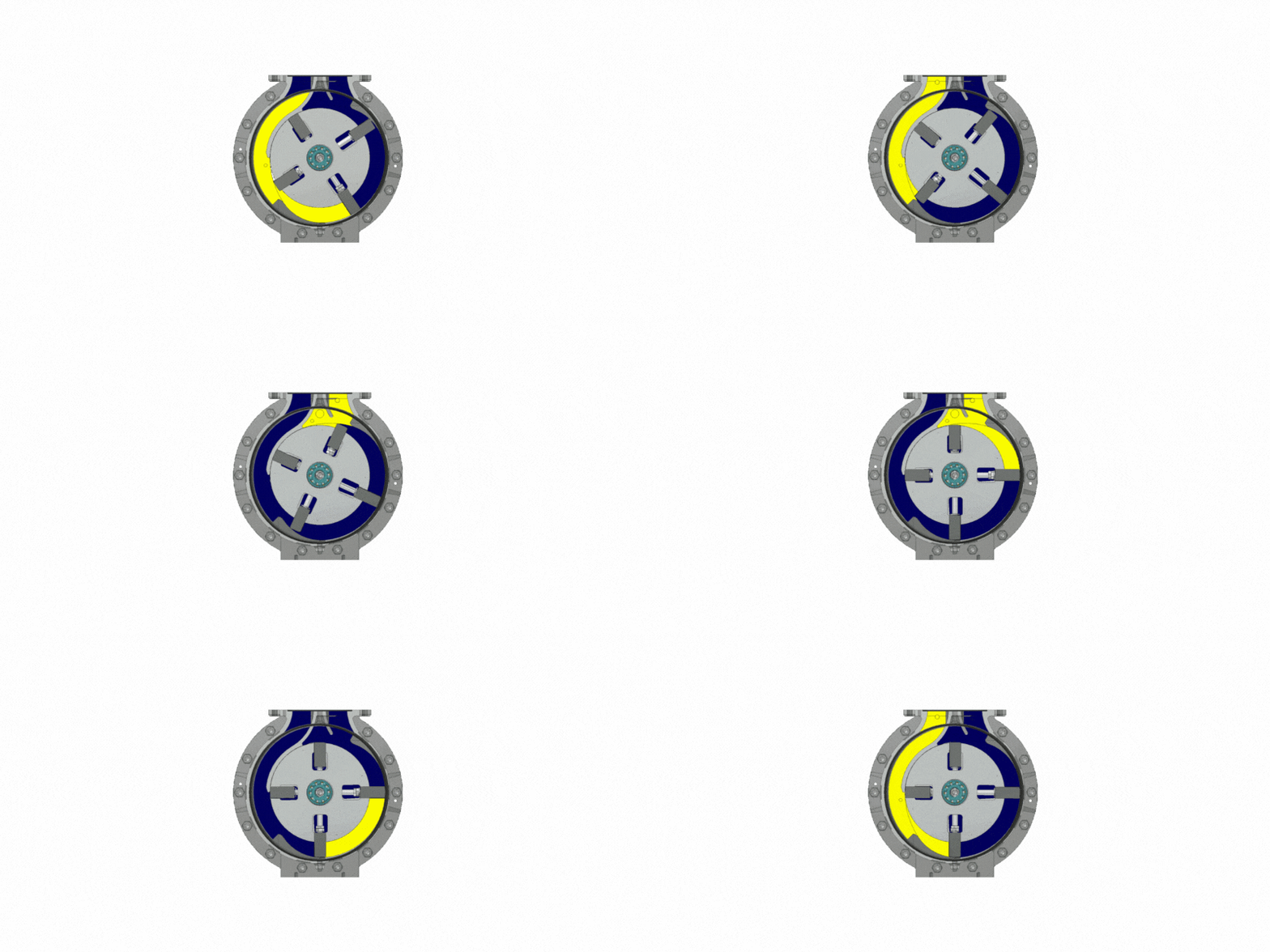
Positive displacement (PD) meters measure flow by dividing the fluid into known, fixed volumes and counting how many times these volumes pass through the meter.
Inside the meter body, there is a measuring chamber with rotating elements (rotors). Each rotation corresponds to a precise quantity of liquid. Rotations can be counted using a mechanical or electronic counter (e.g., a pulse emitter connected to a batch controller).
The process works as follows:
- Fluid enters the measuring chamber.
- The rotor rotates as the fluid moves through the chamber.
- Each complete rotation corresponds to a known volumetric quantity of fluid.
- The number of rotations is counted using either:
- a mechanical counter, or
- an electronic pulse emitter connected to a batch controller or digital system.
By counting these rotations, the system determines the total volume and flow rate passing through the meter.
This working principle makes PD meters particularly suitable for applications requiring high volumetric accuracy.
Why choose a PD oil flow meter
Among the many flow measurement technologies available, PD meters offer a unique combination of accuracy, repeatability, easy maintenance, and durability.
High accuracy
Positive displacement meters are known for their excellent measurement accuracy, typically within tight tolerance ranges, thanks to the minimal clearance between internal moving components.
This precision is achieved through:
- High-precision manufacturing
- Tight mechanical tolerances
- Stable measurement principles independent of flow profile
Unlike some other technologies, accuracy is not significantly affected by upstream pipe conditions, such as turbulence or flow disturbances.
Outstanding repeatability
PD meters offer exceptional repeatability, meaning they can maintain the same measurement performance over repeated cycles. This is essential in applications such as custody transfer, where measurement consistency directly impacts financial transactions.
Long service life
One of the key advantages of PD technology is durability. When properly installed and maintained, these meters can operate reliably for 10 to 20 years of continuous service.
Low maintenance
Because of their robust mechanical design, PD meters typically require limited maintenance, reducing downtime and operational costs.
Wide turndown ratio
PD meters can operate accurately across a wide range of flow rates, making them suitable for systems with variable operating conditions.
Discover all our measurement solutions
Discover
Digital oil flow meter: advantages of electronic measurement
Modern industrial systems increasingly rely on digital oil flow meters to improve monitoring, automation, and data integration.
A digital oil flow meter combines the mechanical accuracy of PD technology with electronic measurement, using a batch controller and communication systems.
Key benefits of digital oil flow meters
Real-time data monitoring
Digital transmitters provide continuous measurement data that can be integrated into control systems or monitoring platforms.
Improved process control
Operators can track flow rates, totalized volumes, alarms interlock (e.g., grounding monitors, overfill prevention systems, other sensors), and performance indicators instantly.
Integration with automation systems
Digital outputs allow seamless connection with:
- PLC systems
- SCADA platforms
- industrial IoT monitoring systems
Higher operational transparency
Digital readings reduce manual measurement errors and allow detailed logging of flow data for audits or process optimization.
For industries handling fuels, chemicals, or lubricants, digital oil flow meters provide a more efficient and traceable measurement infrastructure.
When to use an oil flow meter
Positive displacement meters are volume meters, meaning they measure the actual volume of liquid passing through the system.
They are the ideal choice when volume is the primary measurement variable, especially in applications where liquids are sold, transferred, or injected based on measured volume.
- Custody transfer of fuels and light hydrocarbons - Accurate volumetric measurement is critical when fuel is sold or transferred between parties.
- Lubricant measurement - Industrial lubrication systems rely on precise dosing and monitoring.
- Chemical injection and dosing systems - Precision measurement is essential when injecting additives or chemicals into processes.
- Pharmaceutical and specialty chemical applications - High-precision dosing is required for sensitive production processes.
Particular case: fuel oil flow meter applications
A fuel oil flow meter is specifically designed to measure the flow of fuel oils used in industrial energy systems, marine engines, generators, and heating installations.
Accurate measurement of fuel oil consumption is essential for:
- Energy management
- Cost monitoring
- Operational efficiency
- Regulatory compliance
Typical applications
- Fuel distribution terminals - Flow meters ensure precise fuel loading and unloading operations.
- Industrial boilers and burners - Monitoring fuel oil consumption helps optimize combustion efficiency and reduce energy waste.
- Marine and transportation sectors - Fuel monitoring systems support accurate consumption tracking and operational reporting.
- Power generation systems - Fuel oil flow meters enable precise measurement for energy production processes.
Because fuel oils can have higher viscosity levels, PD flow meters are often preferred due to their ability to maintain high accuracy even with thicker liquids.
If you need help selecting the right oil flow meter solution for your application, contact our experts for technical guidance.
Contact us
Contact us for more information about our services and products

 Form sent successfully
 Error
Error