
Gasoline Blending: Process, Benefits, and Measurement

Gasoline blending is a sophisticated process crucial for producing fuels that meet diverse market demands and stringent regulatory standards.
What is gasoline blending?
Gasoline blending is the process of combining various refinery streams, such as naphtha, reformate, isomerate, alkylate, and additional blendstocks, along with performance-enhancing additives, to produce finished gasoline that adheres to specific quality parameters. These parameters can vary significantly based on geographic region, season, and market demand, making blending a dynamic and continuous challenge. The ultimate goal is to optimize the final product's performance characteristics while minimizing production costs and ensuring regulatory compliance.
The importance of gasoline blending in modern refineries
In modern refineries, gasoline blending is not merely a final step but a strategic operation impacting profitability, environmental footprint, and market competitiveness. It allows refineries to maximize the value of intermediate products, react swiftly to market shifts, and produce a range of gasoline grades (e.g., regular, mid-grade, premium) and specialized fuels.
Key objectives: meeting specifications and market demands
The primary objectives of gasoline blending revolve around two pillars:
- Meeting strict product specifications: this includes octane number (RON, MON, AKI), Reid Vapor Pressure (RVP), sulfur content, benzene content, density, distillation curve, and oxygenate content. These are often dictated by regulatory bodies like the US Environmental Protection Agency (EPA) and industry standards such as ASTM.
- Responding to market demands: seasonal variations (e.g., lower RVP for summer gasoline to reduce smog), regional requirements, and consumer preferences for different octane grades all influence blending strategies. Efficient blending ensures that refineries can produce the right product, at the right time, for the right market.
Ambient impact and carbon footprint
Optimized gasoline blending plays a critical role in reducing the environmental impact of refinery and terminal operations. Precise control of blending ratios minimizes off-spec production, reducing the need for reprocessing, energy consumption, and material waste.
Accurate measurement technologies, such as positive displacement meters and advanced flow computers, enable real-time monitoring and tighter process control, ensuring that each component is used efficiently and in compliance with environmental regulations.
This approach is particularly relevant when integrating renewable components into fuel streams, as explored in our article on bioethanol blending: an overview of properties and solutions. In this context, high-precision blending systems support both sustainability goals and operational efficiency, aligning environmental responsibility with economic performance.
Reduce your blending emissions with precision measurement
Discover how ISOIL’s advanced metering and flow control solutions can help you minimize waste, improve efficiency, and support your sustainability targets. Contact our experts today for a tailored solution.
Contact our experts
In conclusion: the key benefits of optimized gasoline blending
- Enhanced product quality and consistency
- Maximized refinery profitability and operational efficiency
- Reduced environmental impact and waste
- Improved supply chain flexibility
Optimized blending supported by accurate measurement ensures consistent quality, cost efficiency, environmental compliance, and operational agility.
Learn more about fuel blending: types, process, benefits, challenges, equipment
Precision gasoline blend measurement: ISOIL’s solutions
Accurate gasoline blending requires both high-performance volume measurement and advanced control of multiple fuel streams. ISOIL provides a fully integrated solution combining PD meters and the VEGA 3 flow computer to ensure precision, reliability, and compliance in refinery and terminal operations.
PD meters for accurate volume measurement

- True volumetric measurement, directly measuring the displaced volume of each gasoline component
- Accuracy up to ±0.1% and repeatability of 0.02%
- Unaffected by flow profile disturbances and vibrations
- Suitable for fuels, oils, and other refined petroleum products
- Long operational life (10–20 years) with minimal maintenance
- Available from 1 ½’’ to 10’’, in aluminum, carbon steel, or stainless steel
- Single and double case executions to meet different pressure and installation requirements
- Compliant with OIML R117 for fiscal and custody transfer applications
VEGA multi-counter stream flow computer for blending control
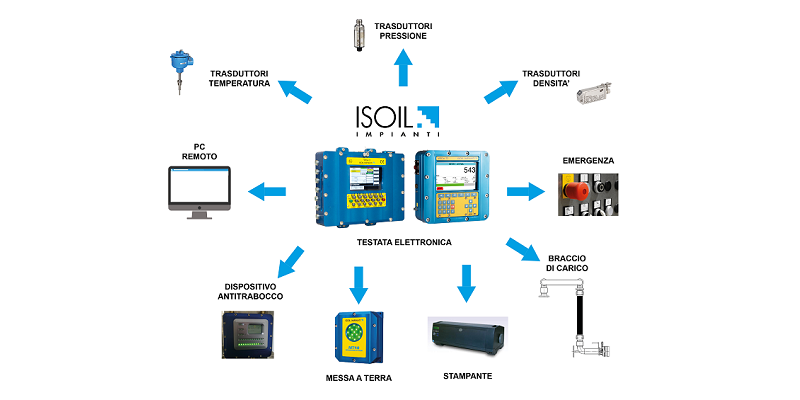
- Manages up to six measuring systems and twelve meters
- Controls multiple blending architectures:
- Sequential blending
- Ratio blending
- Side-stream blending
- Ensures precise synchronization of multiple gasoline streams
- Supports regulatory and fiscal requirements in downstream Oil & Gas operations
- Enhances process efficiency and guarantees consistent final blend quality
Together, ISOIL PD meters and electronic counter VEGA create a scalable and high-precision gasoline blending solution, ensuring optimal performance, reliable accounting, and strict adherence to product specifications.
Optimize your gasoline blending accuracy
Looking to improve measurement reliability and blending control in your refinery or terminal?
Contact ISOIL today to discuss your gasoline blending project and discover a tailor-made solution designed to maximize accuracy, efficiency, and long-term performance.
Contact us
Contact us for more informations about our services and products

 Form sent successfully
 Error
Error